
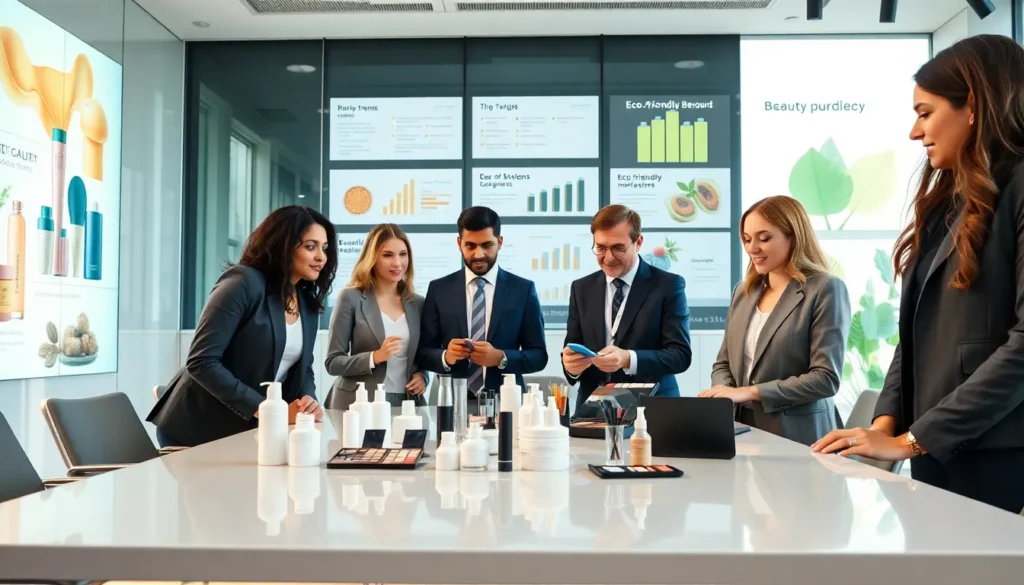
Welcome to the glitzy world of beauty, where mascara meets market dynamics, and skincare innovations shine brighter than any highlighter. Ever wondered what keeps this trillion-dollar industry flourishing? Spoiler alert: it’s not just about chasing the next trending foundation shade. In this enlightening journey, she’ll explore the deep currents shaping the beauty industry group, from historical roots to staggering future predictions. Grab your favorite moisturizer, and let’s jump into the fascinating interplay of glamour and strategy.
Overview of the Beauty Industry
Historical Evolution of the Beauty Industry
The beauty industry boasts a rich tapestry woven from ancient traditions to cutting-edge innovations. For centuries, cultures have celebrated beauty: ancient Egyptians used oils and fragrances, while the Chinese emphasized intricate cosmetic application. Fast forward to the 20th century: Hollywood golden age glam brought beauty to the masses, making cosmetics a household name. Today, the industry’s evolution is fueled by globalization and digital engagement, making beauty accessible, and sometimes overwhelming, for consumers.
Current Trends in the Beauty Industry
What’s hot in the beauty industry right now? Let’s talk trends. The rise of clean, cruelty-free products has consumers demanding transparency: brands scramble to meet this shift. Personalized beauty is also on the rise. With advances in technology, personalized skincare regimens and AI-driven recommendations are becoming the new norm. Also, social media platforms play a pivotal role in elevating brands, as influencers dictate trends faster than you can say “contour.” The beauty industry is not just evolving: it’s transforming into an ecosystem where the consumer is at the core.
Major Players in the Beauty Industry Group
Corporate Structure of Beauty Industry Groups
The corporate structure of beauty industry groups typically features both global giants and niche players. Major corporations often possess multiple brands to cater to diverse consumer bases, with strategic acquisitions helping them expand further. Vertical integration allows these groups to control every aspect, from development to marketing, ensuring consistency and quality across all offerings. Smaller brands, meanwhile, thrive on unique selling propositions, offering custom formulations that appeal to specific target markets.
Key Companies and Their Strategies
Who dominates this lush landscape? Companies like L’Oréal, Estée Lauder, and Procter & Gamble are at the forefront, each with strategies intricately woven through innovation and global reach. L’Oréal, for instance, has made waves with its commitment to sustainability and inclusivity, while Estée Lauder relies heavily on influencer partnerships. Understanding these dynamics provides a clearer picture of how the beauty industry group adapts and thrives amidst changing consumer preferences.
Role of Beauty Industry Groups in Sustainability
Challenges Facing the Beauty Industry Group
Sustainability is a hot topic, but it doesn’t come without hurdles. Many beauty industry groups grapple with waste management, as plastic packaging is a persistent issue. The challenge lies not only in reducing packaging waste but also in changing consumer habits. Besides, sourcing ethical ingredients while keeping prices competitive can feel like walking a tightrope: appealing to consumers without very costly or compromising sustainability ideals.
Impact of Technology on the Beauty Industry
As technology races ahead, it’s making transformative waves in the beauty realm. From augmented reality apps that allow virtual try-ons to innovations in product formulation through AI, technology is reshaping the beauty landscape. Brands that embrace these advancements often find themselves on the cutting edge, delivering untapped consumer experiences that boost engagement and loyalty.
Future Predictions for the Beauty Industry
The future of the beauty industry is nothing short of exhilarating. Analysts predict that by 2030, sustainability will no longer be a trend but a baseline expectation. Consumers will demand products that not only enhance their appearance but also contribute positively to the planet. Besides, hyper-personalization will reach new heights, with products tailored to individual data profiles. Collaborations across industries, such as tech and wellness, will cultivate innovative product lines that promote overall health, intertwining beauty with well-being in unprecedented ways.


